Benedict Cross
is a historical fiction author focused on the rise of warriors in the Roman world. Drawing inspiration from Gladiator and Bernard Cornwell, his work blends authentic settings with fast-paced storytelling, exploring honour, brotherhood, and the cost of command.
His Strength & Honour series follows Marcus Aelius Maxentus through Rome’s brutal frontier campaigns—where discipline is survival, and ambition has a price.Shaped by close exposure to military life and a lifelong passion for Roman history, his work is grounded, authentic, and driven by the quiet heroism of ordinary men.Now based in New Zealand, he continues the saga from his home overlooking the Southern Alps.
Stories forged in war. Bound by honour.
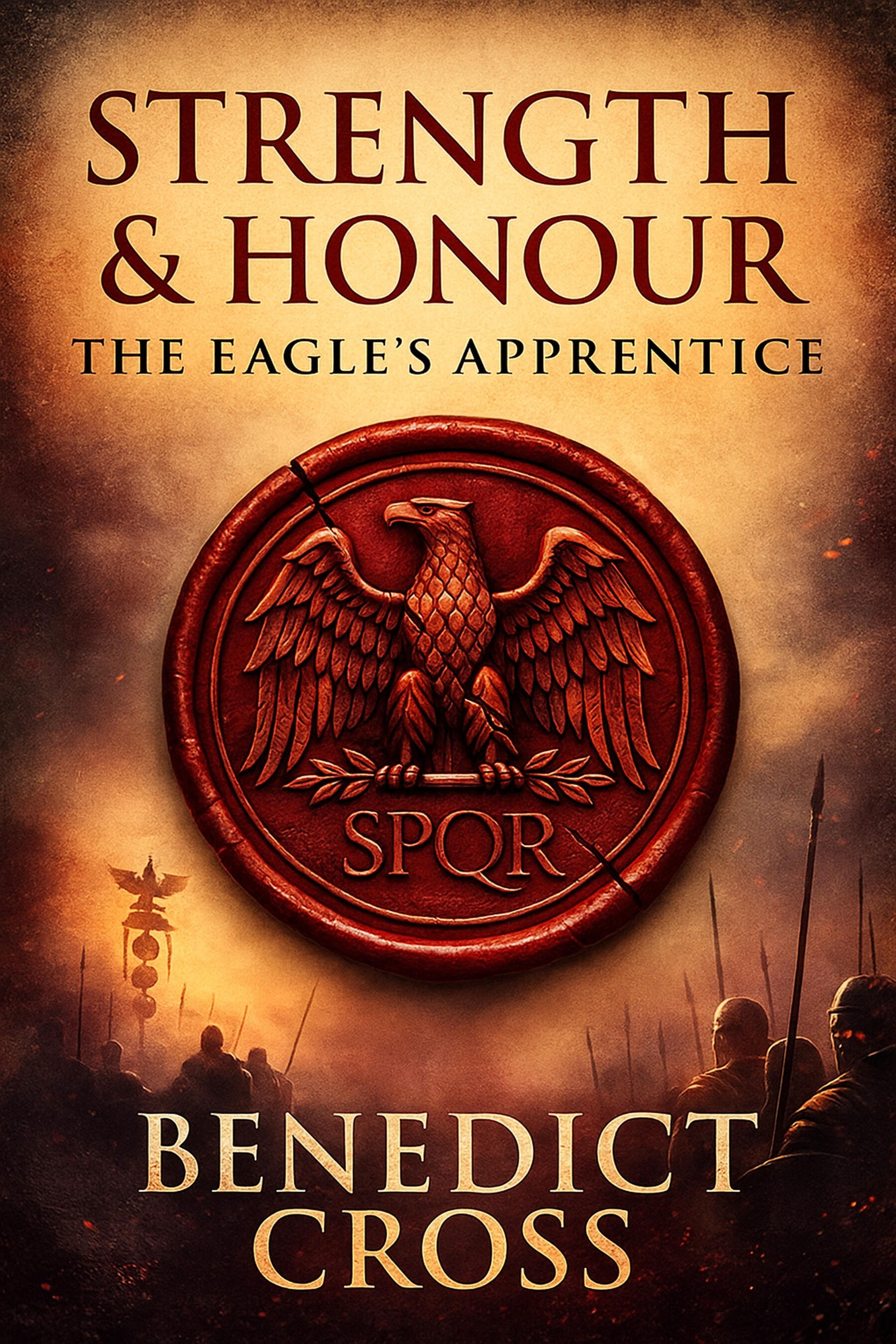
STRENGTH & HONOUR
THE EAGLE'S APPRENTICE
In the shadow of a rising empire, young Maxentus is torn from the only life he’s known and thrust into the brutal world of the Roman legions—discipline, blood, brotherhood, survival.Under the hard eye of veteran soldiers and the crushing weight of command, he must learn fast—or die faster.But war is more than steel and orders. It shapes men. It breaks them. And sometimes… it forges something greater.From the windswept hills of Hispania to the chaos of Rome’s frontier wars, The Eagle’s Apprentice is a gripping coming-of-age tale of courage, loyalty, and the price of honour.
Stories forged in war. Bound by honour.
STRENGTH & HONOUR
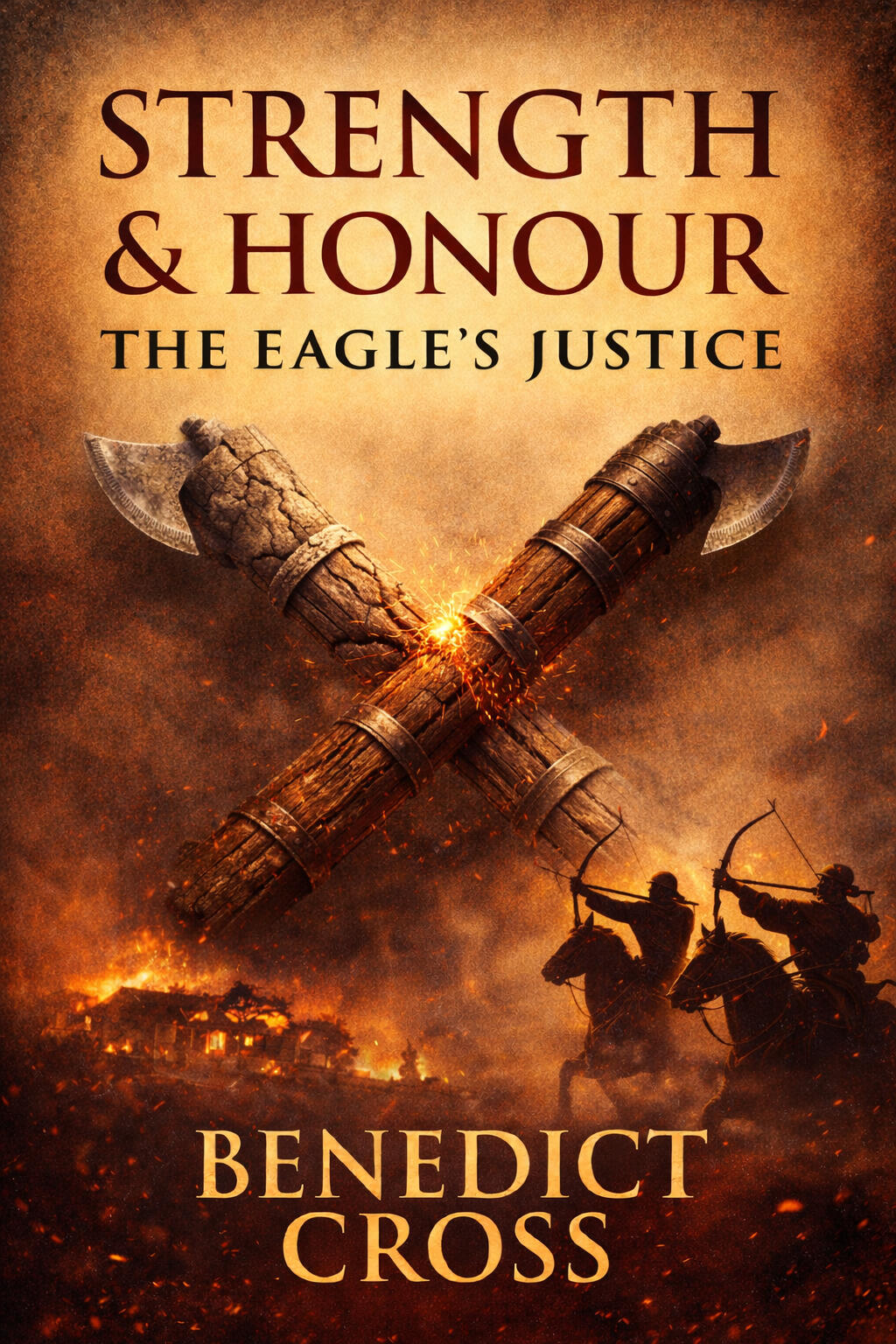
THE EAGLE'S JUSTICE
War has changed him—but Rome demands more.
In The Eagle’s Justice, Maxentus stands at the edge of a harsher world, where command is no longer earned by strength alone, but tested through sacrifice, loyalty, and consequence. As the reach of the empire stretches further, so too does the cost of serving it. Among shifting alliances and growing unrest, Max must navigate a path where every decision carries weight—and justice is never clean.In this gripping continuation, honour is challenged, power is contested, and the line between duty and survival begins to blur.Rome is watching. And it will not be denied.
Stories forged in war. Bound by honour.
STRENGTH & HONOUR
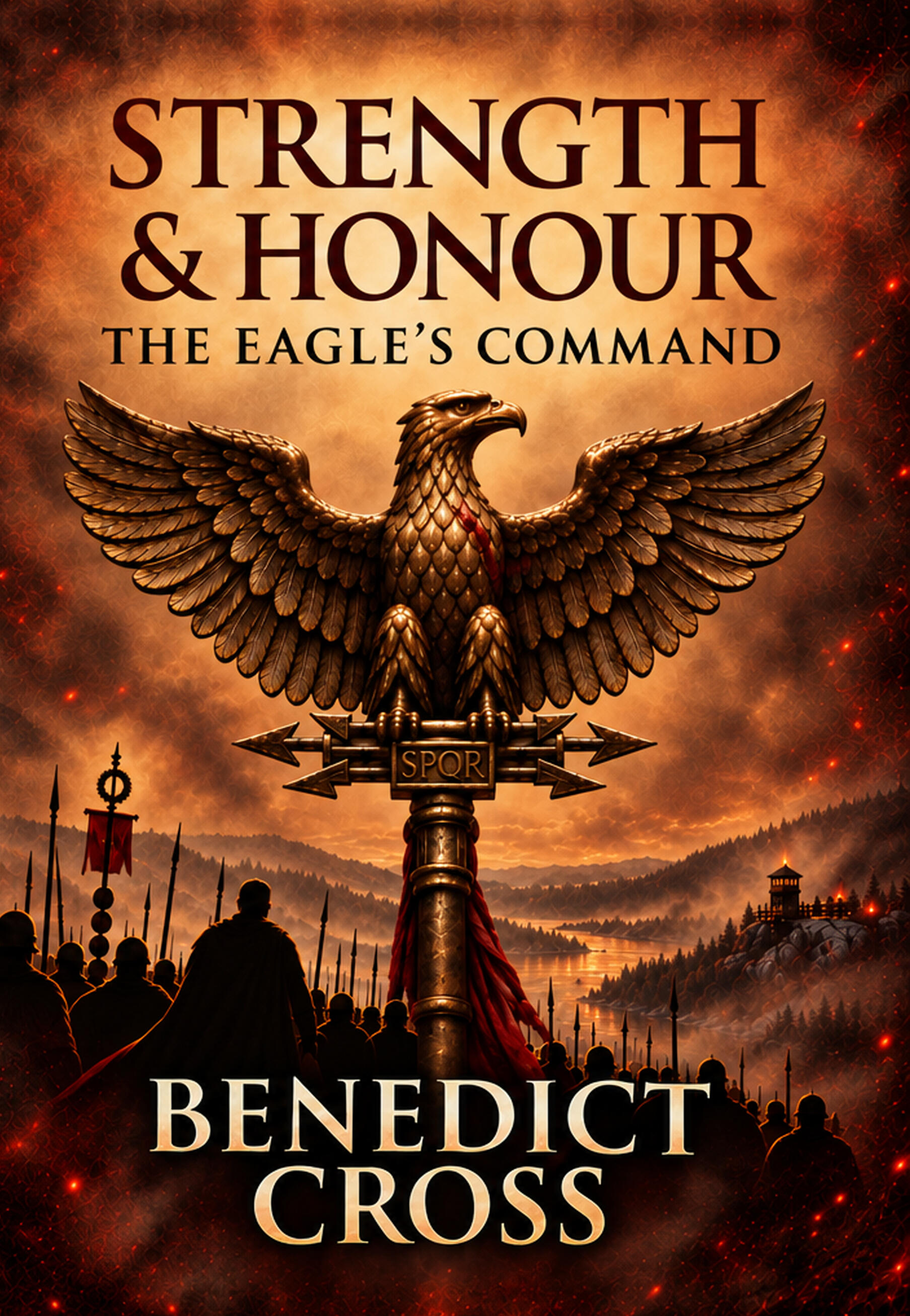
the eagle's command
Rome forged him for war.
Command will temper him in blood.Summoned to the Danube frontier, Marcus Aelius Maxentus finds Rome stretched thin. Roads fail. Convoys vanish. Watchtowers burn.Now commanding hundreds, he must lead exhausted men through ambush, winter marches and deception—without becoming the kind of Roman he has always feared.A gritty Roman epic of brotherhood, cavalry warfare, sacrifice and command.
Stories forged in war. Bound by honour.
Historical Inspiration
While the characters, events, and battles of Strength & Honour are works of fiction, aspects of Marcus Aelius Maxentus’ career drew inspiration from real officers who served during the reign of Marcus Aurelius.One such figure was Marcus Valerius Maximianus, a 2nd-century cavalry officer and later legionary legate whose extraordinary rise survives only in a handful of inscriptions across the empire. His service in the Parthian campaigns, his leadership during the Marcomannic Wars, and his personal commendation by Marcus Aurelius show how a provincial soldier of talent and courage could ascend to high command along the northern frontier. His career is pieced together largely from inscriptions — the kind of record that preserves titles and postings, but rarely the man beneath them.
Maximianus is lightly sketched in the historical record, but the outline of his career — service on distant borders, command under immense pressure, and the favour of the emperor — offered a model for imagining how a young provincial like Maxentus might rise in an age when the empire demanded everything from the men who defended it.History leaves silhouettes: fiction lets us step into them.This Saga does not attempt to retell Maximianus’ life, nor does he appear as a character. Rather, his surviving inscriptions provided inspiration for the plausible pathways a soldier might take in a time of war, loyalty, and shifting imperial destiny.
Stories forged in war. Bound by honour.